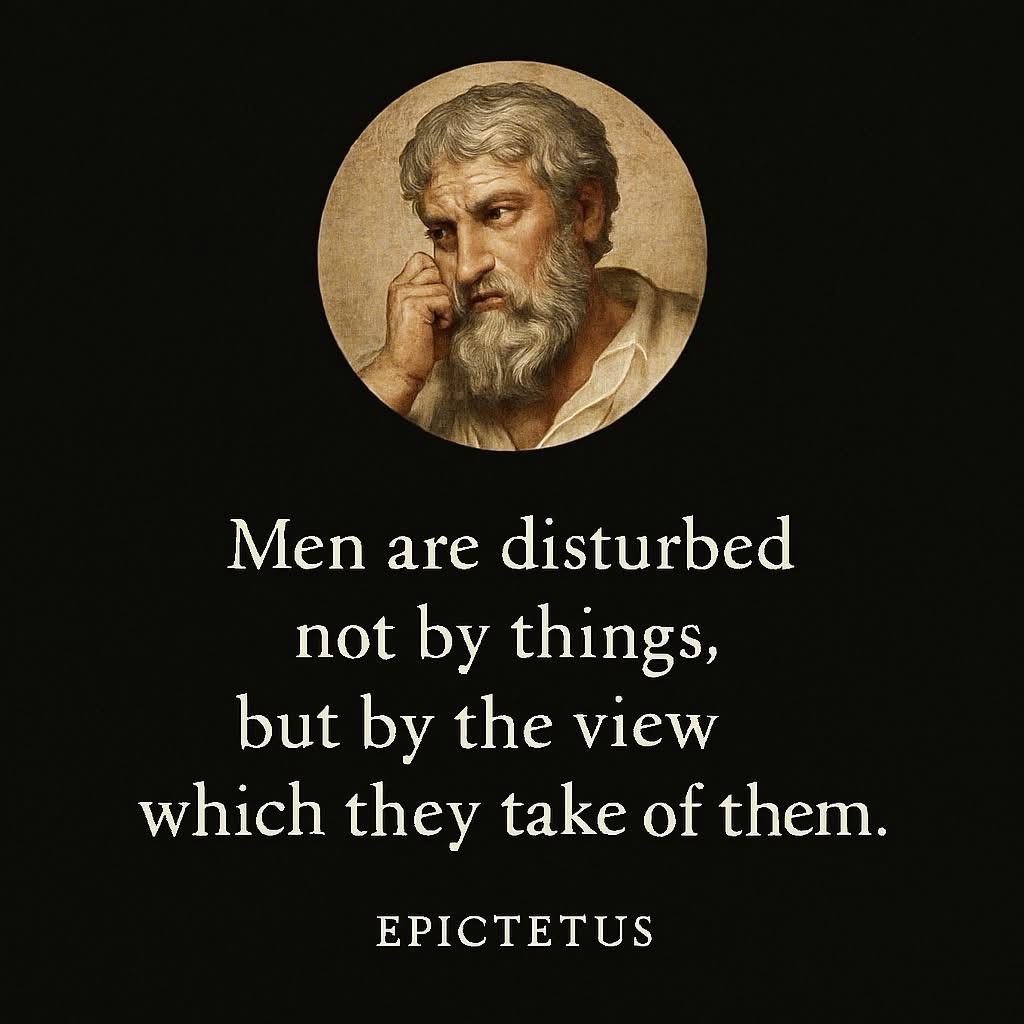
The ancient Stoic philosopher Epictetus said it best: “Men are disturbed not by things, but by the view which they take of them.” It’s a line that has survived for centuries because it contains a truth we still need to hear today—most of our suffering doesn’t come from events themselves, but from the story we tell ourselves about them.
We tend to take a small inconvenience, a misunderstood comment, or a setback at work, and inflate it into something much larger in our minds.
The driver who cuts us off in traffic isn’t just careless—we imagine they’re personally out to ruin our day. The friend who doesn’t text back quickly isn’t just busy—we wonder if we’ve done something wrong.
The reality? Most of the time, people aren’t thinking about us as much as we think they are. Situations aren’t loaded with the meaning we assign to them—they just are.
How We Make Things Worse
Our minds are problem-solving machines. That’s usually a good thing, but it also means we have a habit of turning neutral events into threats. We run mental simulations of “what this means” and “what could happen next” until a simple moment is blown out of proportion.
A co-worker is short with you → They must hate me
You get constructive feedback → I’m a failure
You make a small mistake → Everything’s ruined
In reality, none of those conclusions are facts—they’re interpretations. And interpretations can be wrong.
A Shift in Perspective
One of the most powerful skills you can develop is the ability to pause between what happens and how you respond. That space is where you can choose a new perspective:
Ask yourself: Is there another explanation? Maybe that driver is late for a hospital visit. Maybe your friend’s phone is dead. Maybe your co-worker had a rough morning.
Zoom out: Will this matter in a week? A month? A year? Most of our irritations have a very short shelf life.
Focus on what you control: You can’t stop the rain, but you can bring an umbrella. You can’t change someone’s mood, but you can control your own response.
Looking at People Differently
When we see people as flawed humans—just like us—it’s easier to meet them with patience rather than irritation. Everyone is carrying burdens we can’t see. Sometimes the “rude” person is just exhausted. Sometimes the “lazy” person is battling something invisible.
By shifting the lens, we can turn frustration into empathy
The Freedom in Perspective
The truth is, life is going to hand us plenty of events we can’t control. But the meaning we attach to them—that’s entirely ours to decide. When we choose to see things differently, we don’t just reduce our stress—we take back our power.
The next time you feel yourself getting worked up, remember: It’s not the thing that’s disturbing you. It’s your view of the thing. And you can always choose a better view.
 Corner of Thought: The Human Experience
Leave a comment