We often blame overthinking for our stress, our sleepless nights, and our inability to move forward. We tell ourselves, “If only I could stop overanalyzing, I’d finally feel at peace.” But what if overthinking isn’t actually the root problem? What if the real issue is a lack of trust?
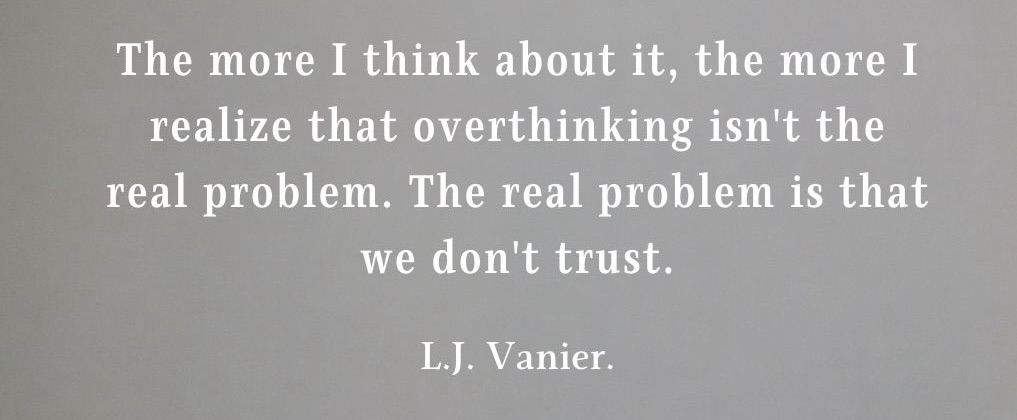
L. J. Vanier once wrote, “The more I think about it, the more I realize that overthinking isn’t the real problem. The real problem is that we don’t trust.” And when you sit with that truth, it changes everything.
Think about it:
We replay conversations in our heads not because we love dissecting words, but because we don’t trust that others understood our intentions—or that we’re enough. We second-guess decisions, not because we enjoy mental loops, but because we don’t trust that life will unfold in our favor. We delay action, not because we’re addicted to hesitation, but because we don’t trust ourselves to handle the consequences.
At the heart of overthinking lies fear. And fear is what grows in the absence of trust.
Trust doesn’t mean blind faith or ignoring reality. It means choosing to believe in your ability to handle whatever comes next. It’s a quiet confidence that says:
I’ve made mistakes before, and I survived. I can survive again. I don’t need every answer right now; I’ll figure it out as I go. I don’t have to control every outcome to still create a meaningful life.
The moment you shift from overthinking to trusting, the mind slows down. The storm quiets. And decisions no longer feel like life-or-death battles—they become steps in a larger journey.
So maybe the real work isn’t about “stopping” overthinking. Maybe it’s about cultivating trust: trust in yourself, trust in others, and trust in the flow of life. Because when trust grows, overthinking loses its grip.
 Corner of Thought: The Human Experience
Leave a comment