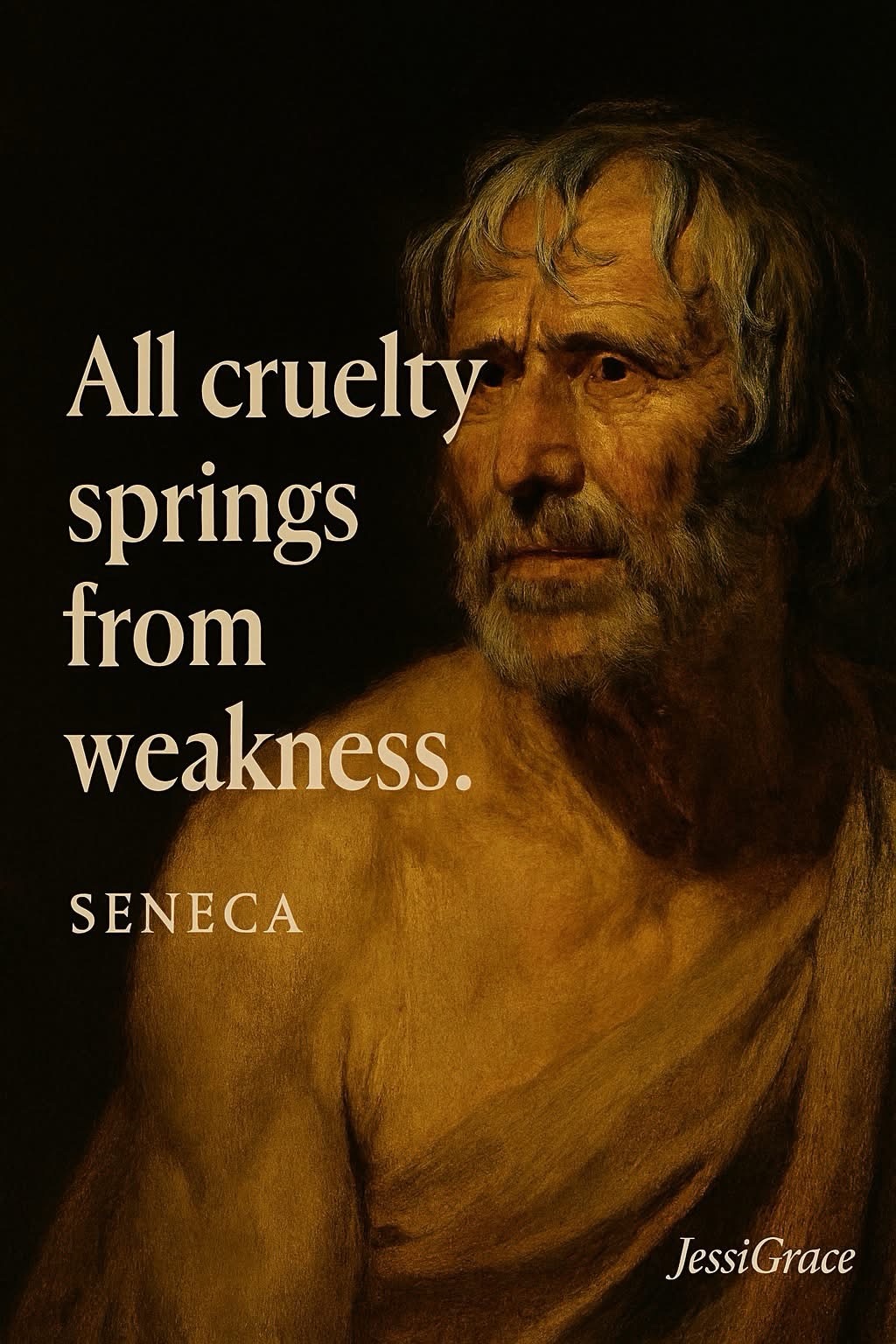
When we encounter cruelty in the world, it is tempting to assume it comes from power, confidence, or dominance. In reality, cruelty is usually a symptom of inner fracture. It grows out of fear, insecurity, shame, and unresolved pain. A person who is whole has no need to harm others. A person who is wounded often does.
This is why the phrase “hurt people, hurt people” rings true across cultures and generations. Pain that is not understood or healed does not disappear. It seeks expression. For some, it turns inward as despair or self sabotage. For others, it spills outward as anger, manipulation, or cruelty. The behavior may look aggressive, but the root is almost always fragile.
Cruelty as a Mask for Weakness
Weakness does not always look weak. It can wear the disguise of sarcasm, control, intimidation, or moral superiority. These behaviors are attempts to regain a sense of power when someone feels small or threatened inside. Cruelty becomes a shield. If I can diminish you, I do not have to face my own inadequacy.
This does not excuse harmful behavior. Understanding the source of cruelty is not the same as tolerating it. But recognizing that cruelty comes from weakness allows us to respond with clarity rather than confusion. It helps us avoid internalizing what was never about us in the first place.
Why Hurt People Hurt Others
Unprocessed pain distorts perception. When someone has been betrayed, neglected, or humiliated, their nervous system often stays in a defensive posture. They begin to see threats where none exist. Neutral actions feel like attacks. Disagreements feel like rejection. In that state, lashing out can feel like self protection.
Many people were never taught how to sit with pain, name it, or move through it in a healthy way. So they export it. They spread what they feel because it is the only language they know.
How to Respond Without Becoming Hardened
The challenge is learning how to respond to cruelty without absorbing it or reflecting it back.
First, do not personalize it. Cruelty says far more about the inner world of the person delivering it than about the person receiving it. When you stop taking it personally, its power over you diminishes.
Second, set clear boundaries. Compassion does not require proximity. You can understand someone’s pain while still refusing access to harm. Boundaries are not punishment. They are protection.
Third, resist the urge to retaliate. Meeting cruelty with cruelty may feel justified in the moment, but it quietly reshapes your own character. You do not defeat weakness by adopting it.
Fourth, choose firmness over hostility. Calm, direct responses often expose cruelty for what it is. Weakness thrives on chaos and emotional reaction. It loses ground in the presence of steadiness.
Finally, tend to your own wounds. The most reliable way to break the cycle of cruelty is to heal what is unresolved within yourself. When you are grounded, you are far less likely to pass pain along to others.
Breaking the Cycle
Cruelty is contagious, but so is strength. Strength does not shout. It does not need to wound. It is steady, rooted, and self possessed. When you refuse to let cruelty define your response, you interrupt the chain.
Hurt people may hurt people, but healed people heal people. And every time you choose understanding without surrender, boundaries without bitterness, and strength without cruelty, you prove that weakness does not get the final word.
 Corner of Thought: The Human Experience
Leave a comment